Financial control in early recovery: 5 steady steps that cost nothing
 Save
Managing money in early recovery means creating a structure that protects you from yourself while you rebuild trust with your finances. The first week is about visibility and barriers, not perfection. Whitley Wildlife focuses on nature, outdoor wellbeing and emotional support in gambling recovery, and this page gives you the practical steps that work outdoors and indoors alike.
Immediate money steps for the first week
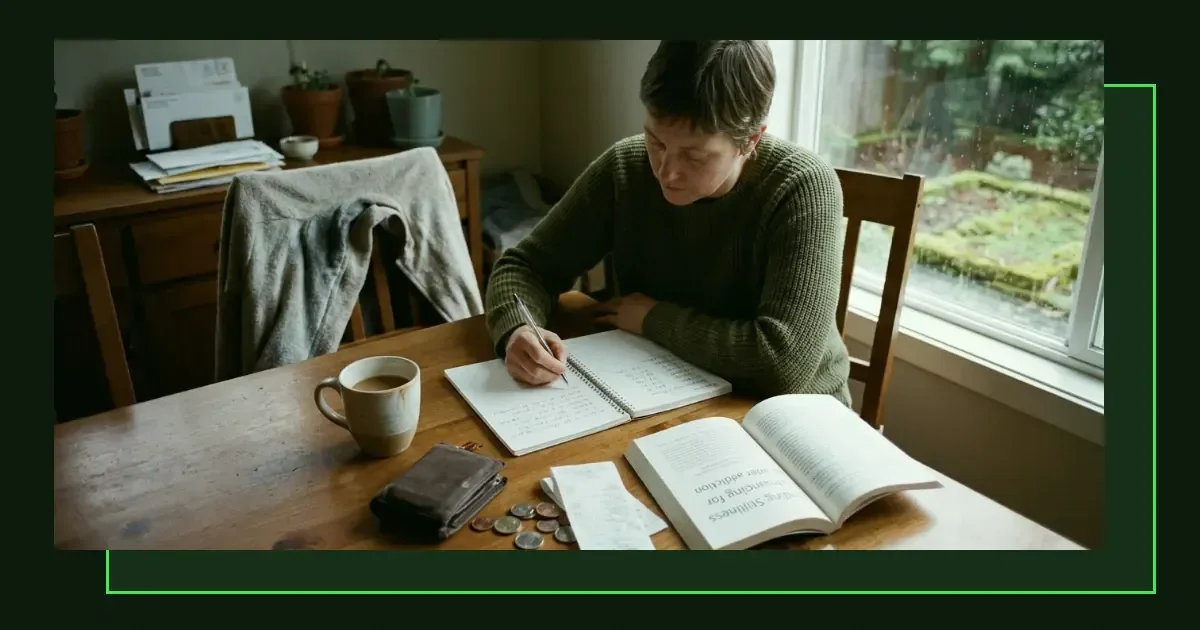
Before anything else, you need to see what you have and where it can go. Open your banking app or log into your account and write down the balance. Then look at what needs paying in the next seven days: rent, bills, food. Subtract those from the balance and whatever is left becomes your visible margin.
That margin is not spending money yet. It is the gap between you and immediate crisis, and knowing its size steadies you. If the number is negative, contact your creditors today and explain you are in early recovery. Most have breathing-space schemes that pause collection while you get clear.
Remove all payment cards linked to gambling sites. If you have set up withdrawals or faster-payment links, delete them from your bank's payee list. The barrier does not have to be permanent, but it needs to exist while urges are still louder than reason.
Access limits and who holds the cards
Set a daily spending limit on your debit card through your banking app. Even a temporary cap forces a pause before any large transaction. Some people hand their card to a trusted person for the first fortnight and draw a small amount of cash each morning for immediate needs.
Cash makes spending visible in a way card payments do not. You see the notes leave your hand, you feel the wallet lighten. If that tactile feedback helps, use it. If handling cash feels like a trigger because of how you funded gambling before, stay digital but ask someone you trust to review your transactions with you twice a week.
Control does not mean you have failed if you need someone else to hold a boundary for you. It means you are serious about protecting what you have left.
Free outdoor alternatives to paid entertainment
Early recovery often leaves a void where gambling used to sit, and your brain will look for something to fill it. Paid entertainment feels like a reward, but it drains money you cannot spare yet. The outdoors costs nothing and gives you the twin benefits of distraction and emotional regulation.
Local parks, woodlands and riversides are free to access. Woodland walks and the rhythm they give your emotions explains how green spaces steady your nervous system without requiring membership or equipment. A canal towpath, a nature reserve or the edges of common land all offer walking routes that take an hour or more.
Birdwatching needs only your attention. Download a free identification app and spend an afternoon learning what lives near you. Allotments sometimes have waiting lists, but the act of registering gives you a future anchor. Community gardens welcome volunteers, and the work is physical enough to tire you out in a way that helps sleep.
If you live near the coast, coastal walks and the mental clarity they bring shows how shoreline routes offer both movement and perspective. The point is not to become an outdoors expert overnight; the point is to have somewhere to go when the urge to spend or gamble rises.
Building a spending plan that holds under pressure
A budget in early recovery is not about optimising pennies. It is about creating a plan you will actually follow when your thinking is compromised by craving or shame. Start with fixed outgoings: rent, utilities, council tax, phone, travel to work. Write them in a notebook or a notes app with their due dates.
Next comes food, and here you need honesty about what you will realistically prepare. If you are not cooking from scratch right now, do not budget as if you are. A meal deal from a supermarket is cheaper than ordering in when willpower collapses at eight in the evening.
Everything left after fixed costs and food is discretionary, and in the first month that discretionary portion needs to be small and visible. Some people transfer it into a separate account on payday so the main account only holds what must not be touched. Others withdraw it as cash. The method matters less than the separation.
What to do when the plan breaks
You will overspend in the first month. Everyone does. When it happens, write down what the purchase was and what you were feeling beforehand. Boredom, anger and shame are the common triggers for spending that has nothing to do with needing the item. Recognising the feeling lets you plan a different response next time.
Do not abandon the plan because you broke it once. Adjust the discretionary amount if it was unrealistic, but keep the structure. The plan is there to catch you when you stumble, not to punish you for stumbling.
Steps to rebuild financial visibility
- List every account, card and debt you have in one document, even the ones you have been avoiding. Write the name, the balance and the minimum payment where relevant. You cannot manage what you cannot see.
- Set up transaction alerts on your banking app so every purchase above a threshold you choose sends you a notification. The interruption creates a pause.
- Unsubscribe from retail emails and gambling newsletters immediately. Each one that lands is a prompt to spend or play. Mark them as spam if unsubscribe does not work.
- Check your balance every morning for the first month. It becomes a ritual that grounds you in reality rather than avoidance.
- Redirect one small amount each week into a separate savings pocket or account, even if it is loose change. The act of saving rewires the habit of depleting.
Tools that limit access without shame
Gambling sites licensed in Great Britain are required to offer deposit limits, time-outs and self-exclusion. A deposit limit caps how much you can pay into an account over a set period. Once you hit it, no further deposits are accepted until the period resets. Setting one before the first deposit is easiest; changing it later often involves a cooling-off delay.
Self-exclusion removes your access entirely. GamStop (www.gamstop.co.uk) is a free national scheme that lets you self-exclude from all gambling sites licensed in Great Britain at once, for a minimum period you choose. The block applies across every site registered with it, so one decision protects multiple fronts.
Blocking software such as Gamban (gamban.com, paid subscription) or BetBlocker (betblocker.org, free) works at device level and blocks gambling sites regardless of licensing. If managing money in early recovery means reducing temptation, these tools do that without relying on willpower.
Comparing blocking and exclusion options
| Tool | What it blocks | Cost | Reversal |
|---|---|---|---|
| GamStop | All GB-licensed gambling sites | Free | Not before your chosen period ends |
| Gamban | Gambling sites and apps across devices | Subscription | Difficult to remove during active period |
| BetBlocker | Gambling sites on the device installed | Free | Can be removed but involves deliberate steps |
| Bank spending limits | Transactions above your set cap | Free | Adjusted through app or branch |
When debt feels paralysing
Debt after gambling harm is common, and the shame around it keeps people from seeking help they are entitled to. Contact a free debt advice service such as StepChange or Citizens Advice before you miss a payment. They negotiate with creditors on your behalf and set up affordable repayment plans.
Do not ignore letters or final demands. Opening them is hard, but each one you leave unopened makes the problem feel larger than it is. Set them in a pile, make a cup of tea, and go through them one at a time with someone you trust or alone if that feels safer. Write down who you owe, how much and when the next payment is due.
Some people find that shame after gambling makes it impossible to discuss money with anyone. If that is where you are, start by writing it down for yourself. Seeing the figures on paper rather than as a shapeless dread gives you something concrete to act on.
Planning for urges tied to money
An unexpected refund, a work bonus or even finding a note in an old coat can all trigger the urge to gamble. The feeling is that this money does not count, that it is outside the budget and therefore available for risk. Recognising that pattern before it happens lets you plan a response.
Decide now what you will do with unplanned money. Some people immediately move it into savings or pay down a debt. Others use it for something tangible they have been putting off: new shoes, a repair, a day trip. The decision removes the pause in which gambling becomes possible.
If the urge is already present, leave the house without your wallet or card and go somewhere that requires nothing but your presence. Grounding techniques in nature for anxiety offers practical ways to anchor yourself outdoors when cravings hit. The urge will pass; your job is to outlast it without acting on it.
Where to get help
If managing money in early recovery feels overwhelming, or if gambling is still pulling at you, contact one of the organisations below. All are free and confidential, and none will judge where you are.
- GamCare (www.gamcare.org.uk) operates the National Gambling Helpline on 0808 8020 133, free and available at any hour.
- BeGambleAware (www.begambleaware.org) provides information and direct support for people affected by gambling harm.
- Gordon Moody (www.gordonmoody.org.uk) offers residential and online treatment for gambling addiction.
Gambling is for people aged 18 and over. If you share a device with someone younger, parental-control software such as Net Nanny or Qustodio can block access to gambling sites and protect them from exposure.
Download PDF: First-week financial control checklist PDF, 29 KB
Frequently asked questions
How do I stop myself spending money I have set aside for bills in early recovery?
Move bill money into a separate account as soon as you are paid, or hand your main card to someone you trust and keep only enough cash for daily needs. Physical separation reduces impulsive spending when urges are high.
What free activities can replace the time I used to spend gambling?
Local parks, woodland walks, canal towpaths and nature reserves are free and offer both distraction and emotional grounding. Birdwatching, volunteering at community gardens and exploring coastal paths cost nothing and help regulate your nervous system.
How do I handle debt from gambling without feeling paralysed by shame?
Contact a free debt advice service such as StepChange or Citizens Advice before you miss payments. They negotiate with creditors on your behalf and the act of seeking help often reduces the overwhelming feeling that keeps you stuck.