Supporting a partner through gambling recovery: boundaries, outdoor routines and what not to do
 Save
Supporting a partner through gambling recovery means holding boundaries while offering steady presence, and knowing when to step back. Whitley Wildlife explores the balance between supporting someone you love and protecting your own wellbeing, with practical outdoor activities that rebuild connection without pressure. You will find ways to create helpful routines together, recognise when professional support is needed, and avoid the common mistakes that damage both the recovery and the relationship.
The balance between support and control
Your role is to support, not to manage your partner's recovery. That distinction matters because taking responsibility for someone else's choices leaves you exhausted and them dependent. Support means being present when asked, holding agreed boundaries and continuing your own life. Control means checking their phone, managing their money without consent or trying to prevent every possible relapse.
In practice: you can offer to join them on a morning walk, but you cannot make recovery happen for them. The work is theirs; your presence is the support. When you try to control the outcome, resentment builds on both sides.
Boundaries that protect both of you
Clear boundaries keep the relationship intact while your partner recovers. These are not punishments; they are agreements that protect your wellbeing and give your partner the space to take responsibility for their own recovery.
Financial boundaries
Separate finances during early recovery reduces conflict and removes you from the role of monitor. One joint account for shared bills with agreed contributions, and individual accounts for everything else, gives clarity. If debts exist, agree who is responsible for which payments and put it in writing. Do not lend money, do not cover gambling debts, and do not become the household banker.
Emotional boundaries
You are allowed to say when you cannot talk, when a conversation has become circular or when you need time alone. Supporting someone in recovery does not mean absorbing every emotion they experience. Set a time limit on difficult conversations if they drain you, and be honest when you need to step away.
Boundaries around honesty
Agree early that honesty matters more than perfection. If your partner relapses and lies about it, the lie often causes more damage than the relapse itself. Make it clear you would rather hear difficult truth than discover deceit later. For more on this, see six ways to stop lying about gambling.
Shared outdoor activities that rebuild connection
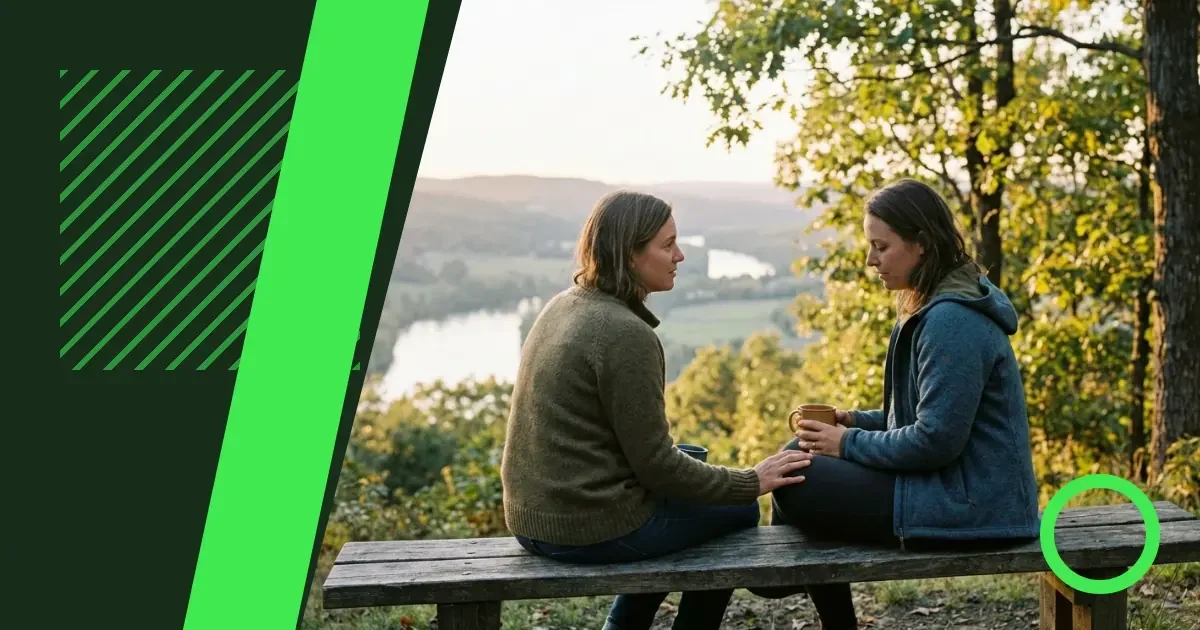
Time outdoors together creates connection without the intensity of sitting face-to-face discussing recovery. Walking side by side, tending an allotment or watching birds shifts the focus outward and gives you both something to do with your hands and attention.
- Regular walking routes – choose a loop you can both manage and walk it at the same time each week; the rhythm becomes a shared anchor.
- Allotment work – tasks like weeding, planting or watering are physical, visible and offer a sense of progress that recovery sometimes lacks.
- Birdwatching – sitting quietly together with binoculars demands patience and shifts attention away from internal stress; read more in birdwatching mindfulness practices.
- Coastal walks – the openness of the shore and the sound of water can ease tension; many people find it easier to talk while walking near the sea.
These are not distractions from recovery; they are part of it. Rebuilding trust happens through steady, repeated actions more than through conversations.
What not to do
Certain responses feel helpful but undermine both recovery and the relationship. Avoiding them takes effort, especially when worry or anger runs high.
| Action | Why it harms | What to do instead |
|---|---|---|
| Monitoring constantly | Creates a parent-child dynamic and prevents them taking responsibility | Agree boundaries, then trust them or walk away |
| Covering debts repeatedly | Removes consequences and delays the point where they face reality | Let them manage their own debts; offer moral support only |
| Ignoring your own needs | Leads to burnout and resentment that damages the relationship | Keep your own routines, friendships and interests |
| Expecting gratitude | Turns support into a transaction and adds guilt | Support because you choose to, not for recognition |
Recovery is not linear, and setbacks do not mean failure. Responding to a relapse with anger or withdrawal makes it harder for your partner to be honest next time.
When to involve others
You cannot be the only support. Encourage your partner to connect with professional help, peer groups or helplines, and look after your own support network as well.
If your partner refuses all outside help, threatens harm to themselves or others, or if the relationship has become abusive, involve professionals immediately. Your support has limits, and recognising them is not abandonment.
Steps to take this week
- Have one clear conversation about financial boundaries – who pays for what, and what information you each need to feel secure.
- Suggest one outdoor activity you can do together regularly, choosing something neither of you has strong opinions about to keep it neutral.
- Write down two things you will not compromise on (your own time, honesty, separate finances) and share them calmly.
- Identify one person you can talk to when supporting your partner feels too heavy, and contact them this week even if you do not need them yet.
Rebuilding trust without surveillance
Trust rebuilds through consistent behaviour over time, not through constant checking. If you find yourself monitoring your partner's every move, the relationship has shifted into something that serves neither of you.
Ask for what you need – honesty, regular check-ins, transparency about money – then step back and let them meet those needs or fail to. If they fail repeatedly, that is information about the relationship, not a signal to monitor harder. For practical steps on this, see actions that show you mean it.
Looking after yourself
Supporting a partner in recovery is difficult work, and you are allowed to struggle with it. Maintain your own outdoor routine, even when your partner is not ready to join you. Woodland walks alone, time in the garden or a regular swim gives you space to process your own feelings without guilt. Read woodland walks and the rhythm they give your emotions for ways to use time outdoors for your own emotional health.
If you notice signs of anxiety, sleeplessness or withdrawal in yourself, treat them seriously. You cannot pour from an empty cup, and your own wellbeing is not secondary to anyone else's recovery.
Where to get help
If you are supporting someone affected by gambling harm, help is available for both of you. GamCare offers support at gamcare.org.uk and through the National Gambling Helpline on 0808 8020 133, free and available around the clock. BeGambleAware provides information and guidance at begambleaware.org. Gordon Moody offers residential and online treatment at gordonmoody.org.uk.
For self-exclusion across licensed sites, GamStop is free to use at gamstop.co.uk. Blocking software such as Gamban (gamban.com, paid) and BetBlocker (betblocker.org, free) can be installed on shared devices. Gambling is for people aged 18 and over.
This article is for general information only. Whitley Wildlife is an information site; we do not provide counselling, therapy or personal advice. If you or someone you know is in crisis, contact the helplines above or speak to a healthcare professional. For free, confidential support with gambling, visit BeGambleAware.org. 18+
Download PDF: Supporting Your Partner: A Weekly Checklist PDF, 29 KB
Further reading
Frequently asked questions
How do I support my partner without taking over their recovery?
Offer presence and agreed help when asked, but let them take responsibility for their own choices and setbacks. Set clear boundaries around finances and honesty, then step back and allow them to meet those boundaries or not.
What outdoor activities help when supporting someone in gambling recovery?
Regular walks on the same route, working an allotment together, birdwatching and coastal walks all create connection without pressure. These activities give you something to focus on together and rebuild trust through steady, repeated actions rather than intense conversation.
When should I stop trying to help my partner with their gambling problem?
If your partner refuses all outside help, if the relationship has become abusive, or if supporting them is seriously damaging your own mental or financial health, it is time to involve professionals and reassess the relationship. Your support has limits, and recognising them protects you both.