What is forest bathing: 6 ways to try it in UK woodland
 Save
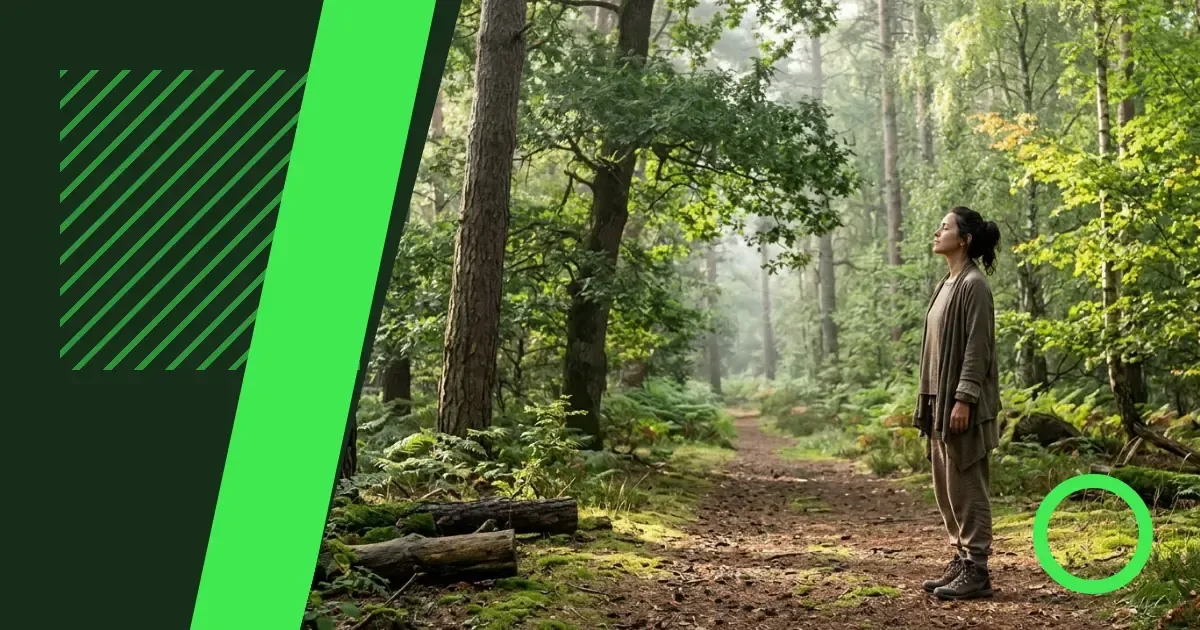
Forest bathing is the practice of spending time among trees, moving slowly and using all your senses to notice what is around you. It began in Japan as shinrin-yoku but needs no formal training or guided session to be effective. The method asks you to be present rather than productive, and the approach works particularly well for people rebuilding their sense of calm after gambling has taken it away. Below you will find how to start, what to notice and why woodland immersion can support your recovery without requiring you to explain yourself to anyone. Whitley Wildlife explores how nature and outdoor wellbeing can help you find steadier ground.
Origins and principles of shinrin-yoku
Shinrin-yoku translates as taking in the forest atmosphere through your senses. Japanese researchers introduced the term in the early nineteen-eighties to describe a form of preventative health care that costs nothing and requires no equipment. The practice rests on one idea: that deliberate time among trees reduces the body's stress response and quiets a restless mind.
Forest bathing is not hiking. You cover little ground and ignore the pedometer. The goal is absorption, not distance. You might spend an hour walking a few hundred metres, stopping to touch bark or watch light move through leaves. What matters is that you notice details you would normally walk past.
The principles are simple. Leave your phone silent or at home. Move at a pace that lets you hear your own breathing. When your thoughts pull you toward worry or regret, redirect your attention to something you can see, hear or smell right now. Woodland immersion works as a grounding technique because it anchors you in the present through sensory input that does not demand anything from you.
How forest bathing differs from a walk
A walk usually has a destination. You aim for a viewpoint, a cafe or the end of a circular route, and the satisfaction comes from completing it. Forest bathing removes that structure. You enter the woods with no fixed endpoint and no obligation to keep moving. Stopping is as valuable as walking.
The difference shows up in how you feel when you leave. After a brisk walk you might feel energised or accomplished. After forest bathing you are more likely to feel quieter, as though someone has turned the volume down. That slowing is the point. For people in recovery from gambling addiction, the urge to fill every moment can be overwhelming. Forest bathing gives you permission to do less, not more.
Practical steps to start in UK woodland
You do not need a formal forest bathing guide or a particular type of woodland. Any green space with trees will work, from a small urban copse to a large country estate. The following steps take you through a simple session you can try this week.
- Choose a location within easy reach where you feel safe walking alone or with one other person. A familiar woodland works better than somewhere new, because you can spend less energy on navigation.
- Set aside at least an hour. Half of that time will feel like settling in. Shorter visits can still help, but the deeper calm arrives after your mind stops checking the clock.
- Walk slowly until you find a spot that draws you: a clearing, a tree with exposed roots, a patch of moss. Stop there and stand or sit for several minutes without doing anything.
- Engage one sense at a time. Close your eyes and listen to the layers of sound. Open them and look at the colours in front of you, naming them silently. Touch the bark or the ground. Notice temperature and texture.
- If your thoughts drift to gambling, money or shame, name the thought quietly and return to what your senses are telling you. The practice is not about emptying your mind but about choosing where to rest your attention.
- When you are ready to leave, walk out slowly. Many people find the transition jarring if they rush it. Give yourself time to adjust before returning to noise and demands.
Sensory engagement and grounding in nature
Grounding techniques help interrupt the spiral of craving or panic by pulling your focus back to the present moment. Forest bathing is grounding through immersion. Instead of counting backward or holding ice, you use the woodland itself as the anchor.
Start with sound. Woods are never silent. You hear wind, birds, insects, the rustle of something small moving through undergrowth. Listening without naming every sound lets your nervous system settle. If you find yourself identifying each bird species or analysing what you hear, you are thinking rather than noticing. Let the sounds wash over you without needing to categorise them.
Sight works differently in woodland. Light filters through leaves in shifting patterns, and colours change with the weather. Look for detail rather than the view: the way water collects on a leaf, the pattern of lichen on a branch, the shape of a spider's web. Narrowing your focus to something small gives your mind a single, manageable task.
Touch and smell are often underused senses. Running your hand along bark, pressing your palm into damp soil or smelling pine resin after rain all bring you into your body. For someone whose thoughts race toward the next bet or the last loss, physical sensation interrupts that loop. You cannot worry about what you cannot control while fully absorbed in the texture of moss under your fingers.
Why it works for recovery from addiction
Gambling addiction trains the brain to crave intensity: the rush of a win, the desperation of a loss, the high-alert state of chasing. Recovery requires building a tolerance for stillness, and stillness feels unbearable at first. Woodland immersion offers a middle ground. You are doing something, but nothing is demanded of you. The environment is engaging enough to hold your attention without triggering the need for control or outcome.
Time in woodland also creates distance from triggers. You are away from your phone, the high street, the places you used to gamble. That physical separation is not avoidance; it is a deliberate pause that gives your nervous system a chance to recalibrate. Many people in recovery find that after an hour among trees, the craving they woke up with has either faded or become manageable.
The practice teaches you to tolerate boredom without filling it. Early recovery is often marked by a frantic need to stay busy, because being still means facing what you have been running from. Forest bathing asks you to sit with that discomfort in a setting that holds you without judgement. The trees do not care what you have done. They simply stand there, and you stand there with them.
Comparing woodland immersion to other nature-based practices
| Practice | Primary focus | Typical duration | What it offers recovery |
|---|---|---|---|
| Forest bathing | Sensory immersion | One to two hours | Grounding and slowing without physical exertion |
| Coastal walking | Movement and rhythm | Thirty minutes to two hours | Repetitive motion that clears the mind |
| Gardening | Hands-on care | Flexible, from twenty minutes up | Routine and visible progress over time |
| Birdwatching | Observation and patience | One hour or more | Learning to wait without expectation |
Each practice serves recovery in its own way. Forest bathing suits people who need to slow down but find meditation too abstract. Coastal walking works for those who process emotion through movement. Gardening appeals to anyone rebuilding trust in their ability to nurture something. Birdwatching rewards patience, a skill gambling often erodes. You do not have to choose one. Many people in recovery rotate between them depending on what they need that day.
What to expect in your first sessions
The first time you try forest bathing, you will probably feel restless. Your mind will argue that you should be doing something useful, covering more ground or achieving a goal. That resistance is normal. The practice asks you to unlearn the belief that your worth is tied to productivity, and unlearning takes time.
You might also feel exposed. Without distraction, emotions you have been pushing down can surface. Anger, shame, sadness or a sudden wave of grief are all common in early recovery, and spending an hour in the quiet gives them room to arrive. This is not a sign that forest bathing is making things worse. It is evidence that the practice is working: you are finally present enough to feel what has been there all along.
After a few sessions, the restlessness usually softens. You stop checking your watch as often. You begin to notice things you missed before: the smell of damp earth, the sound of your own footsteps, the way light changes as clouds move. These small observations build into a larger shift. You start to trust that it is safe to slow down, and that slowing down does not mean giving up.
Adapting the practice when access is limited
Not everyone lives near large woodland. A city park with mature trees can work just as well. Even a quiet street lined with oaks or a churchyard with old yews offers enough to engage your senses. The key is not the size of the space but your willingness to move slowly within it.
If mobility is an issue, you can practise forest bathing from a bench or a single spot. Sit under a tree for twenty minutes and let your attention rest on what is in front of you. Watch how shadows shift, how insects move through grass, how branches respond to wind. Immersion does not require walking.
Weather is rarely a barrier. Rain, fog and wind all change how woodland feels and sounds. A grey day can be more immersive than a bright one, because there are fewer distractions. Dress appropriately and accept that you might get damp. The discomfort is temporary, and the sensory input is richer when conditions are less comfortable.
Support for gambling recovery
Forest bathing is one tool among many, and it works best alongside structured support. If you are struggling with gambling urges, cravings or the shame that follows a relapse, help is available. GamCare offers free, confidential support through its website at https://www.gamcare.org.uk and the National Gambling Helpline on 0808 8020 133, available 24 hours a day. BeGambleAware provides information and resources at https://www.begambleaware.org.
GamStop (https://www.gamstop.co.uk) is a free national self-exclusion scheme that blocks access to gambling sites licensed in Great Britain. For those who need more intensive support, Gordon Moody (https://www.gordonmoody.org.uk) offers residential and online treatment. Blocking software such as Gamban (https://gamban.com) and BetBlocker (https://betblocker.org) can prevent access across all your devices.
Online gambling is restricted to people aged 18 and over. If you share your home with someone younger, parental-control software such as Net Nanny or Qustodio can help protect them from exposure to gambling content.
Forest bathing will not fix addiction on its own, but it can give you a place to be still while the harder work happens elsewhere.
This article is for general information only. Whitley Wildlife is an information site, not a provider of medical or therapeutic services. If you are in crisis, contact your GP or call the National Gambling Helpline. 18+. For free, confidential support visit BeGambleAware.org.
#Grounding techniques #Nature walks
Download PDF: Your first forest bathing session PDF, 28 KB
Further reading
Frequently asked questions
How long should I spend forest bathing if I am just starting?
An hour is ideal, though even twenty to thirty minutes can help if that is all you have. The first half often feels restless as your mind adjusts, so shorter sessions may not reach the deeper calm the practice offers.
What if I live in a city with no large woodland nearby?
Any green space with trees will work, including small urban parks, churchyards or tree-lined streets. The practice depends on your willingness to slow down and notice details, not on the size of the woodland.
Can forest bathing help with gambling cravings when they are intense?
It can interrupt the craving by grounding you in the present through sensory input. The physical distance from triggers and the focus on what your senses are telling you often reduce the intensity of the urge, though it works best as part of wider support rather than as a standalone method.
Whitley Wildlife Editorial Team